Report on Policy Review Meeting: National Food Security Policy 2018
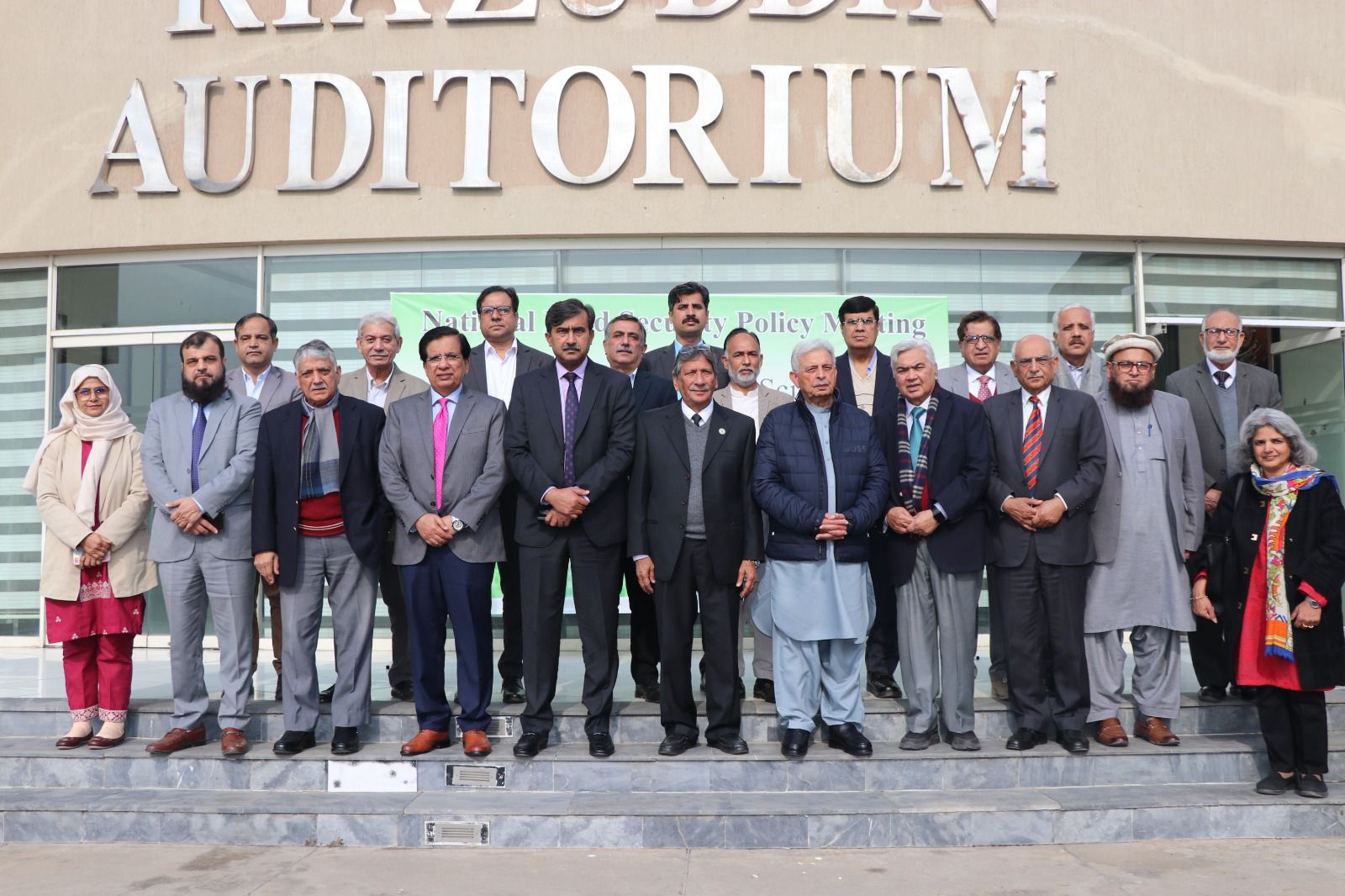
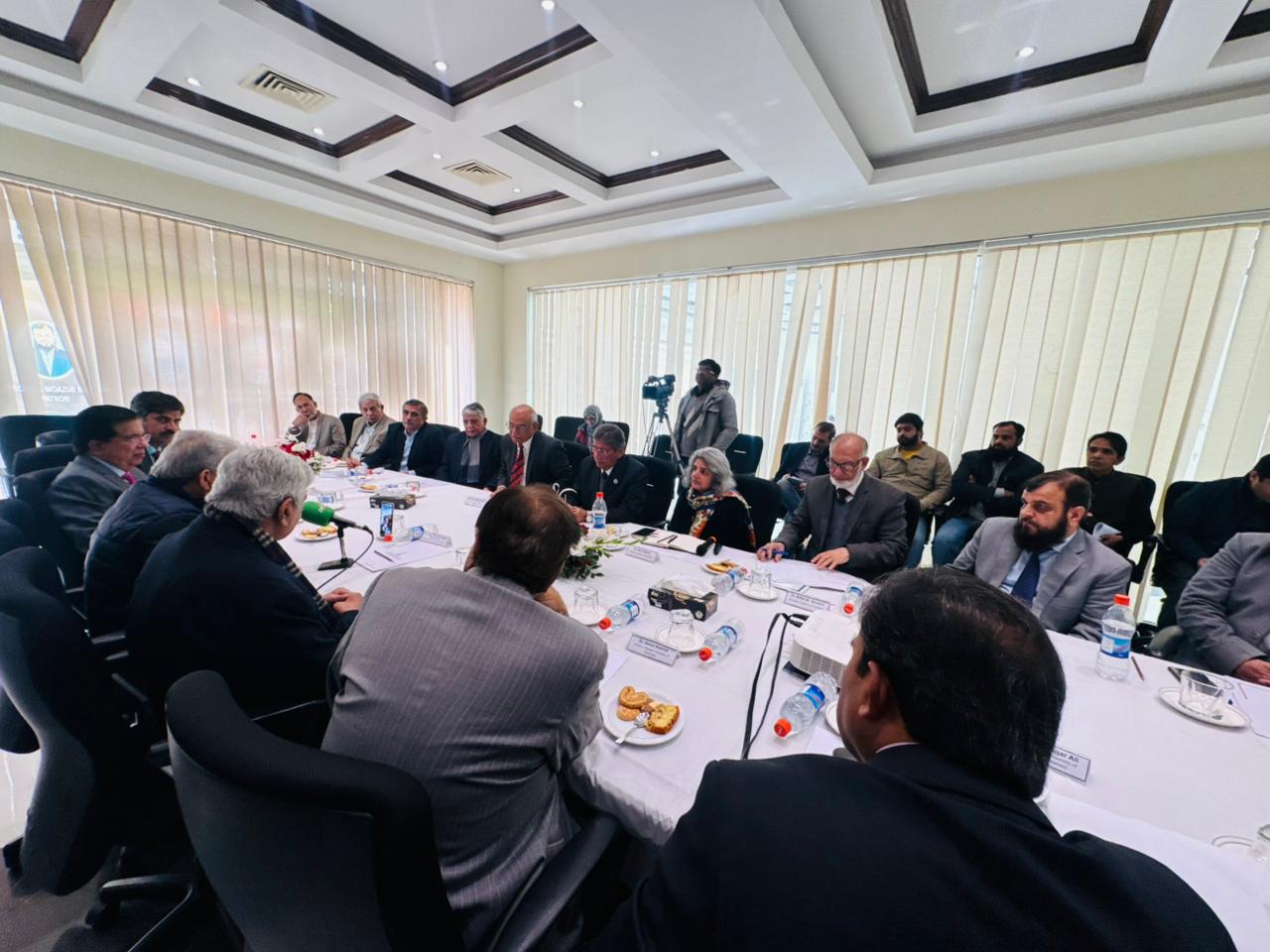
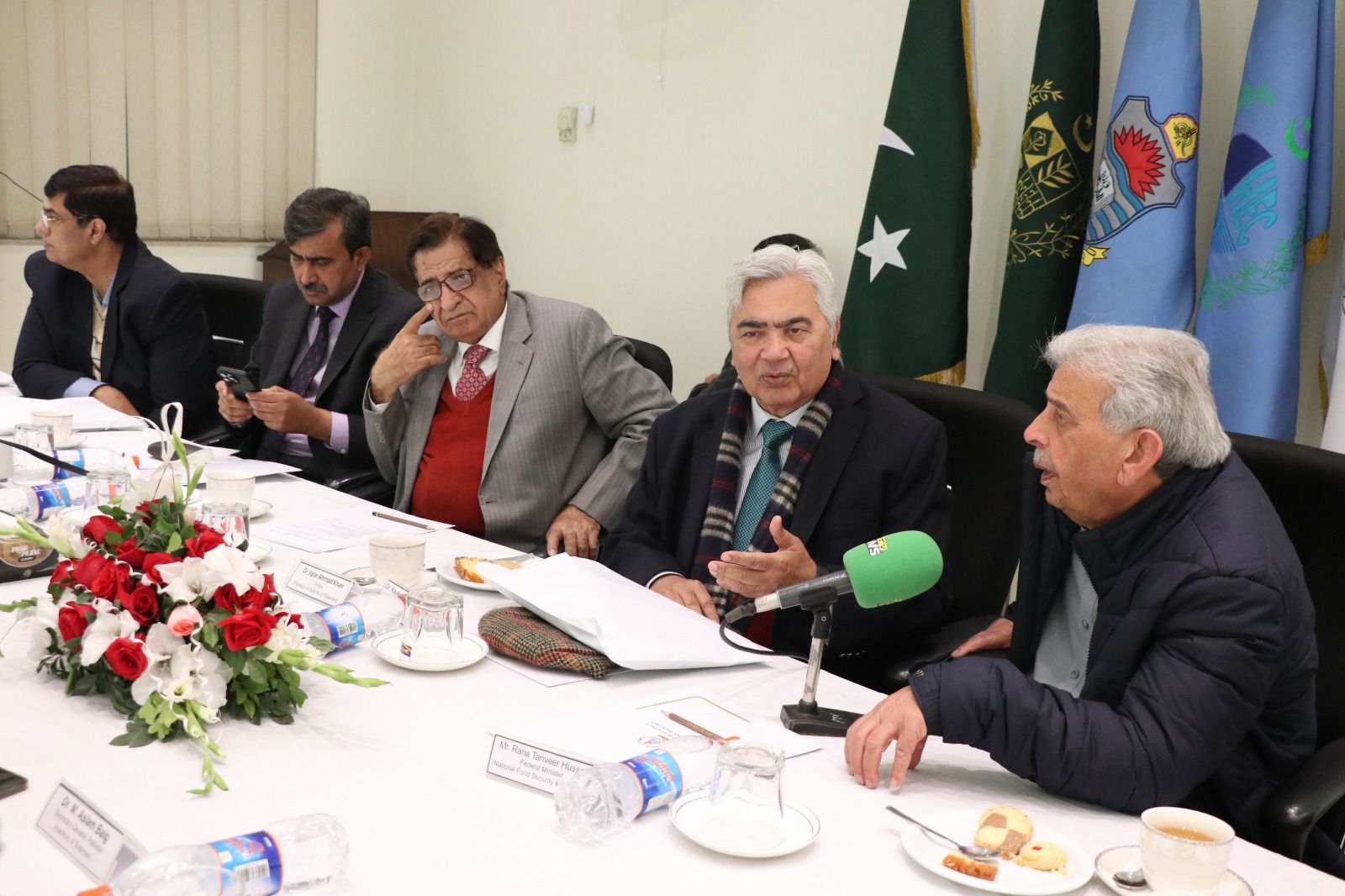
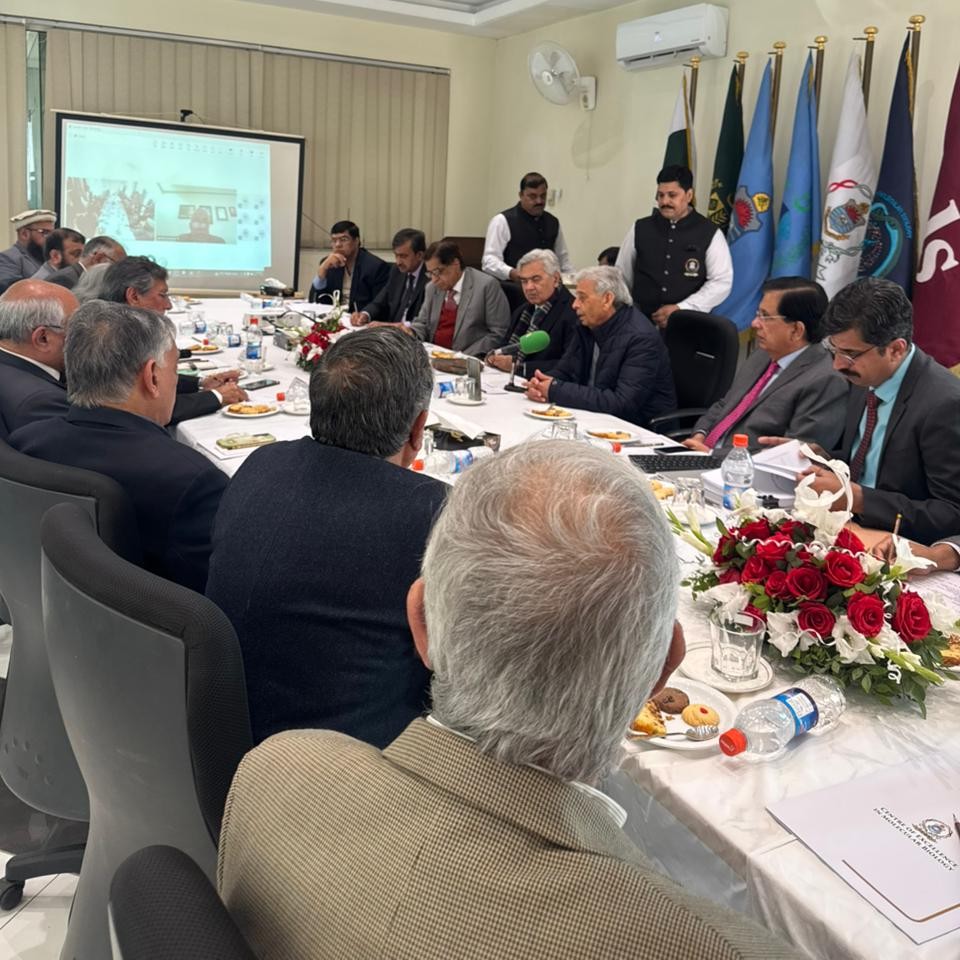
A high-level consultative meeting on the Review of National Food Security Policy 2018 was held on December 29, 2025, at the Centre of Excellence in Molecular Biology (CEMB), University of the Punjab, Lahore. The meeting was organized under the auspices of the Pakistan Academy of Sciences (PAS) with the objective of critically reviewing the existing National Food Security Policy (2018) and proposing evidence-based recommendations for its improvement in light of emerging challenges.
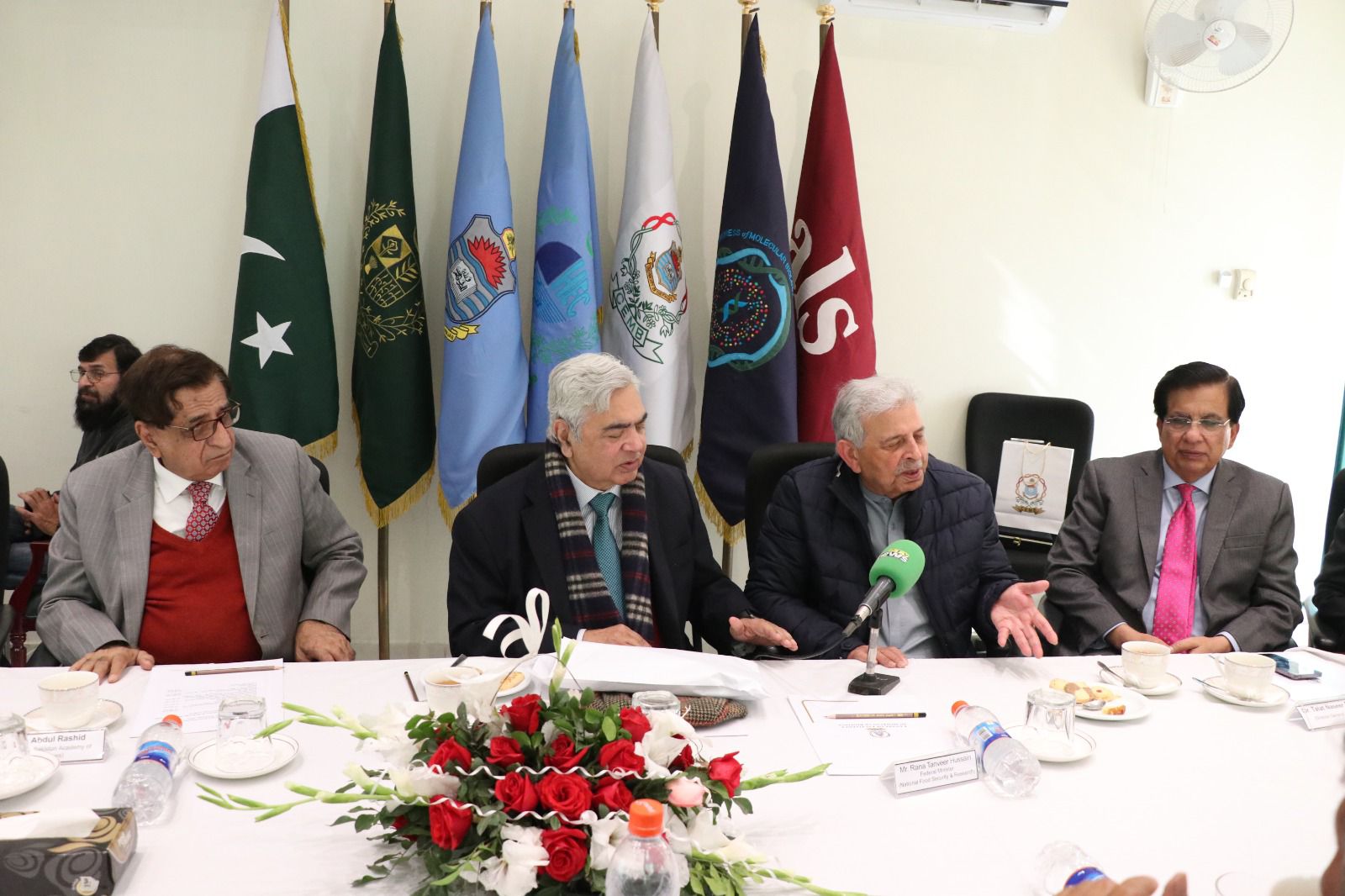
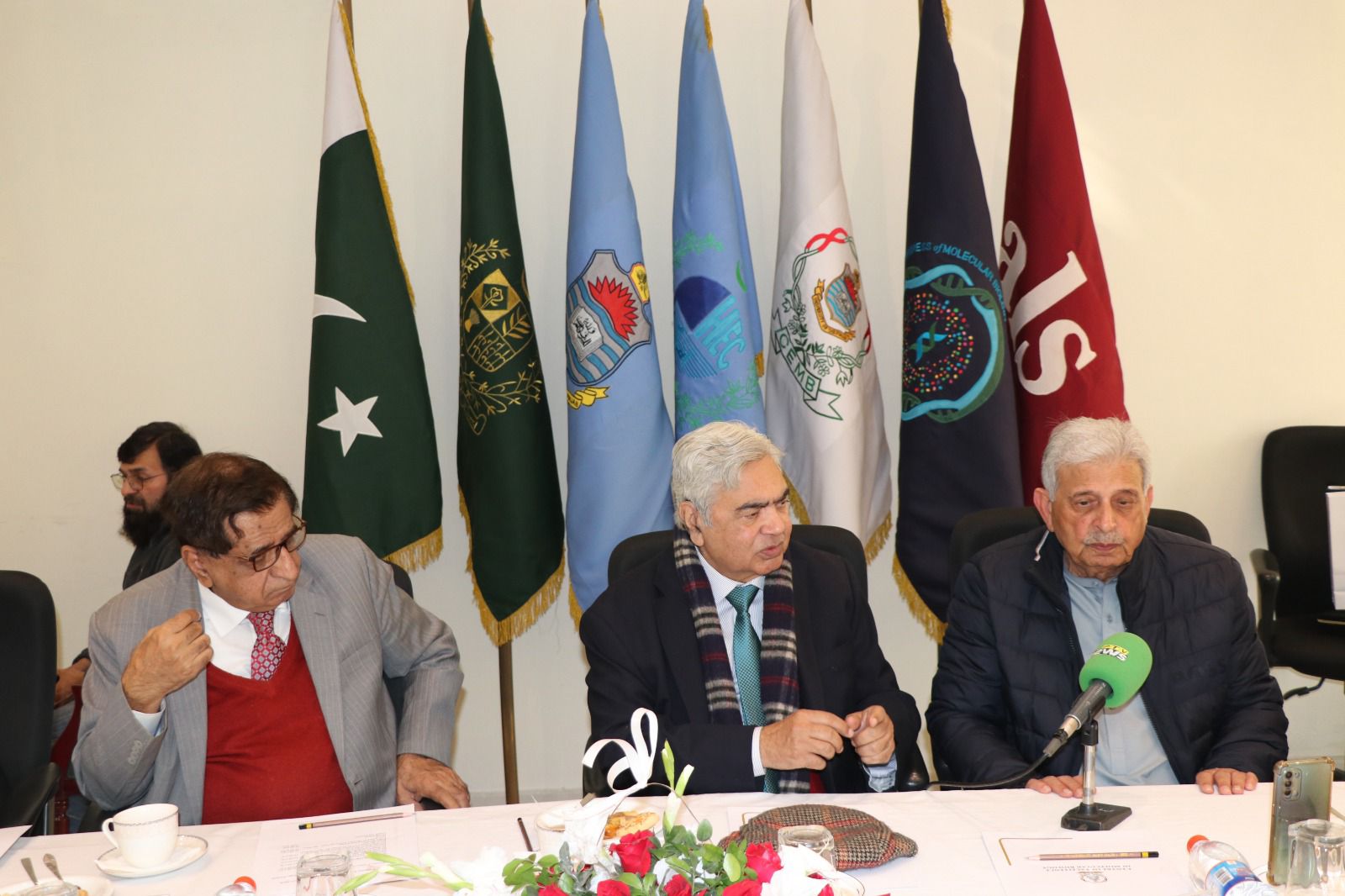
The meeting was graced by Rana Tanveer Hussain, Federal Minister for National Food Security and Research, as Chief Guest.
Participants
The meeting was attended by eminent scientists, academicians, policymakers, and industry representatives, including:
- Prof. Dr. Kauser Abdullah Malik (HI, SI, TI), President, Pakistan Academy of
Sciences - Prof. Dr. Muhammad Ali (HI, SI), Vice Chancellor, University of the Punjab
(online) - Prof. Dr. Aslam Baig (HI, SI, TI), Secretary General, PAS
- Dr. Riffat Mehmood Qureshi, Director Administration PAS
- Dr. Sara Qaisar, Director SAG Unit, PAS
- Prof. Dr. Iqrar Ahmad Khan (HI, SI) (online)
- Prof. Talat Naseer Pasha, DG, PAFDA
- Dr. Anwarul Hassan Gillani, Fellow, PAS
- Dr. Abdul Rashid
- Dr. Maqsood, Livestock Department
- Prof. Dr. Zulfiqar Ali, Vice Chancellor, University of Agriculture Faisalabad
- Dr. Sarzamin Khan, University of Peshawar
- Dr. Farah Naz, Pakistan Institute of Development Economics (PIDE) (online)
- Mr. Asim, CropLife Pakistan (Industry Representative)
- Dr. Abdul Waki, University of Agriculture Faisalabad
- Dr. Asif Kamran, University of Faisalabad
- Dr. Muhammad Mohsin Kiani, Agriculture Expert, Planning Division
- Prof. Dr. Moazur Rahman, Director CEMB & Fellow PAS
Opening Remarks
Prof. Dr. Kausar Abdullah Malik welcomed the Federal Minister and participants. He briefed the Minister on the purpose of the meeting, stating that PAS, through its Policy Review Committee, had convened experts to critically assess the National Food Security Policy 2018, identify gaps, and propose new dimensions aligned with current national and global challenges. He emphasized the importance of the Minister’s presence to ensure policy recommendations translate into actionable outcomes.
Address by the Federal Minister
Rana Tanveer Hussain, Federal Minister for National Food Security and Research, thanked PAS leadership, particularly Prof. Kausar Abdullah Malik, for organizing the meeting. He appreciated the opportunity to interact directly with leading experts and acknowledged that food security is now a core component of national security.
The Minister highlighted:
- Gradual deterioration in agricultural productivity over time
- Inadequate prioritization and funding of agricultural research in past policies
- Scarcity of research funds as a major bottleneck
- The Prime Minister’s personal interest in food security and agricultural reform
- Recent coordination with CAS China for technology-driven agricultural
transformation
He stressed that Pakistan must match population growth with food production to ensure food security. Drawing comparisons with regional competitors, he noted that countries like India, once behind Pakistan, are now not only self-sufficient but also exporting agricultural produce.
The Minister emphasized:
- Development of climate-resilient seed varieties
- Modernization of farming practices and farmer behavior
- Reduction of post-harvest losses
- Strengthening academia–industry linkages
- Improvement in quality and output of agricultural research institutions
He also announced that the government plans to procure 6 million tons of wheat at a support price of PKR 3,500 per maund, in collaboration with provinces, and reaffirmed the government’s commitment to rapid implementation of approved policies.
Technical Discussions and Expert Inputs Policy Gaps and Cross-Sectoral Integration
Dr. Sara Qaisar presented a comprehensive review of the National Food Security Policy 2018, highlighting major gaps including:
- Price instability
- Poor soil health
- High post-harvest wastage
- Lack of measurable KPIs and monitoring mechanisms
She recommended adopting a cross-sectoral approach linking agriculture, nutrition, health, climate change, water, and social protection, aligned with SDGs 2, 12, and 13. Green Revolution 2.0
Prof. Dr. Iqrar Ahmad Khan emphasized the need for Green Revolution 2.0, stating that the policy must be revisited to address identified gaps. He suggested compiling Dr. Sara Qaisar’s review into a policy brief and urged PAS Policy Review Committee to undertake strategic, province-coordinated research. He also stressed the need for rationalizing multiple research institutes to prevent duplication and wastage of
public funds. One Health, Quality, and Implementation Several speakers underscored implementation challenges:
- Prof. Talat Naseer Pasha and Dr. Anwarul Hassan Gillani highlighted the
importance of One Health, food quality control, and moving beyond policy
formulation to actionable implementation. - Prof. Dr. Kausar Abdullah Malik raised concerns regarding the quality of
graduates, noting changing workplace dynamics with a growing proportion of
female students in agriculture. - Prof. Dr. Aslam Baig stressed strengthening agricultural education alongside
applied research.
Nutrition, Livestock, Climate, and Technology Key thematic inputs included:
- Biofortification and malnutrition (Dr. Abdul Rashid)
- Soil nutrition and health (Dr. Anwarul Hassan Gillani)
- Prioritizing livestock R&D funding (Dr. Maqsood)
- Agritech parks, HR quality, and delivery systems (Prof. Dr. Zulfiqar Ali)
- Local vaccine production and livestock resilience to climate change (Dr. Sarzamin Khan)
- Climate-smart agriculture and water-efficient cropping (Dr. Farah Naz)
- Regulatory reforms and industry facilitation (Mr. Asim, CropLife Pakistan)
- Land-use policy, fertilizer reform, and hybrid seed production (Dr. Abdul Waki)
- Interdisciplinary research and end-user inclusion (Dr. Asif Kamran)
- Genomics, reference genome data, livestock productivity, and DRAP approval issues (Dr. Muhammad Mohsin Kiani)
Conclusion and Way Forward
In concluding remarks, Dr. Sara Qaisar summarized that comprehensive recommendations had been generated through stakeholder consensus. Prof. Dr. Aslam Baig, on behalf of PAS, thanked all participants and reaffirmed PAS’s commitment to submitting consolidated recommendations to the government.
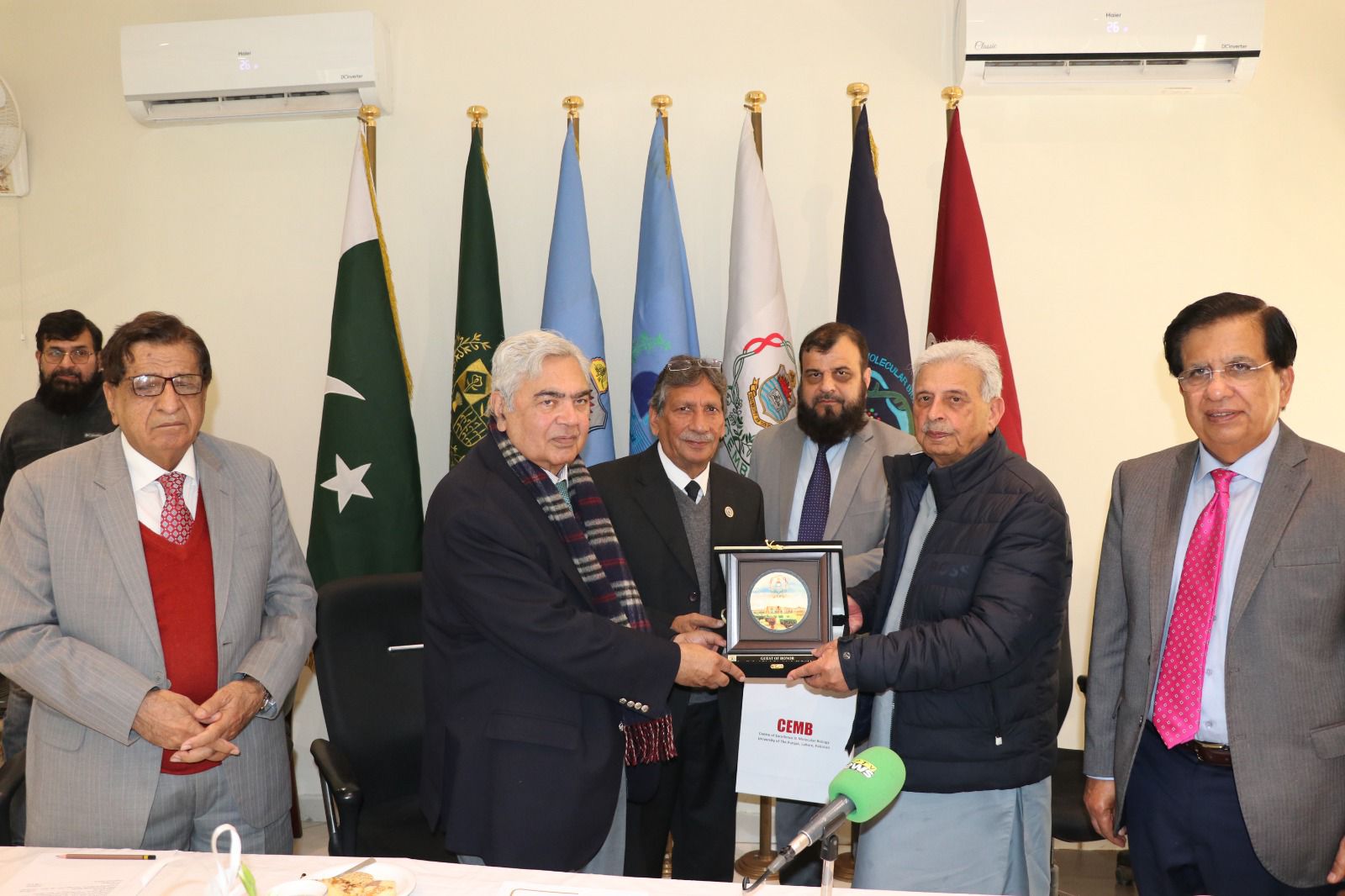
Souvenirs were presented to the Federal Minister by Prof. Dr. Kausar Abdullah Malik, Prof. Dr. Aslam Baig, and Prof. Dr. Moazur Rahman in appreciation of his participation and support.
The meeting concluded with appreciation for Prof. Dr. Moazur Rahman, Director CEMB, for successfully organizing the event.